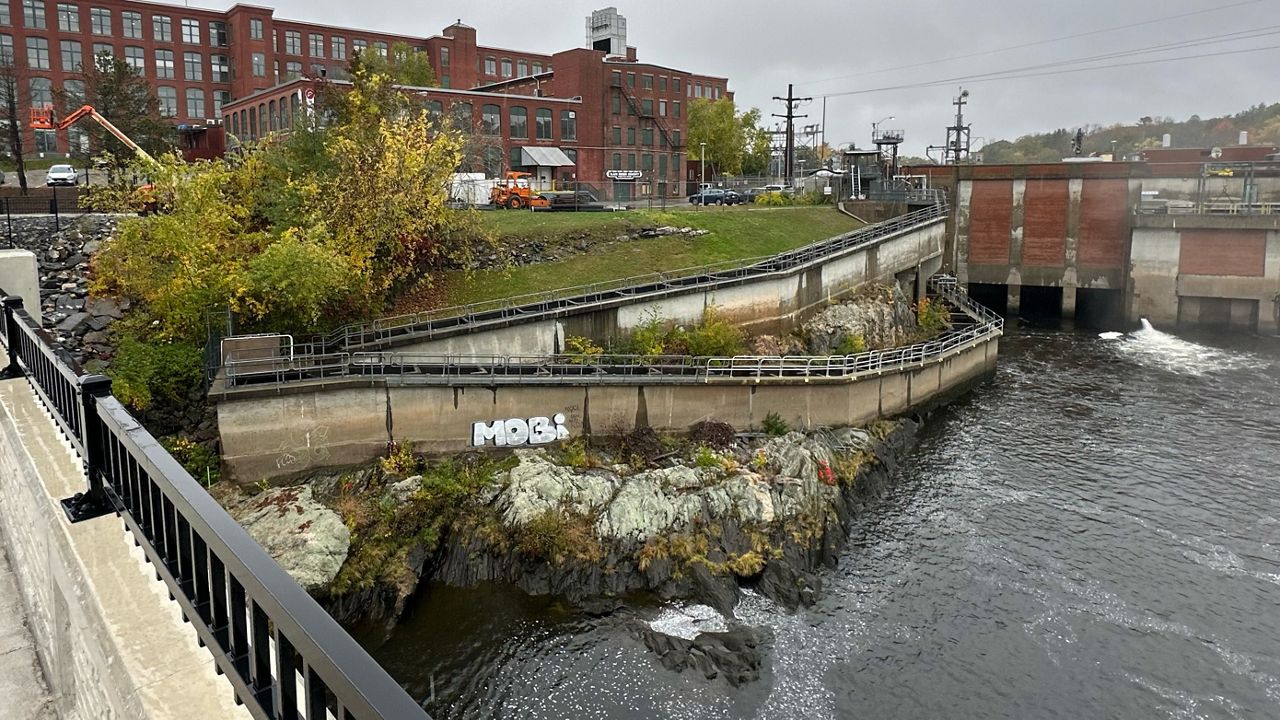


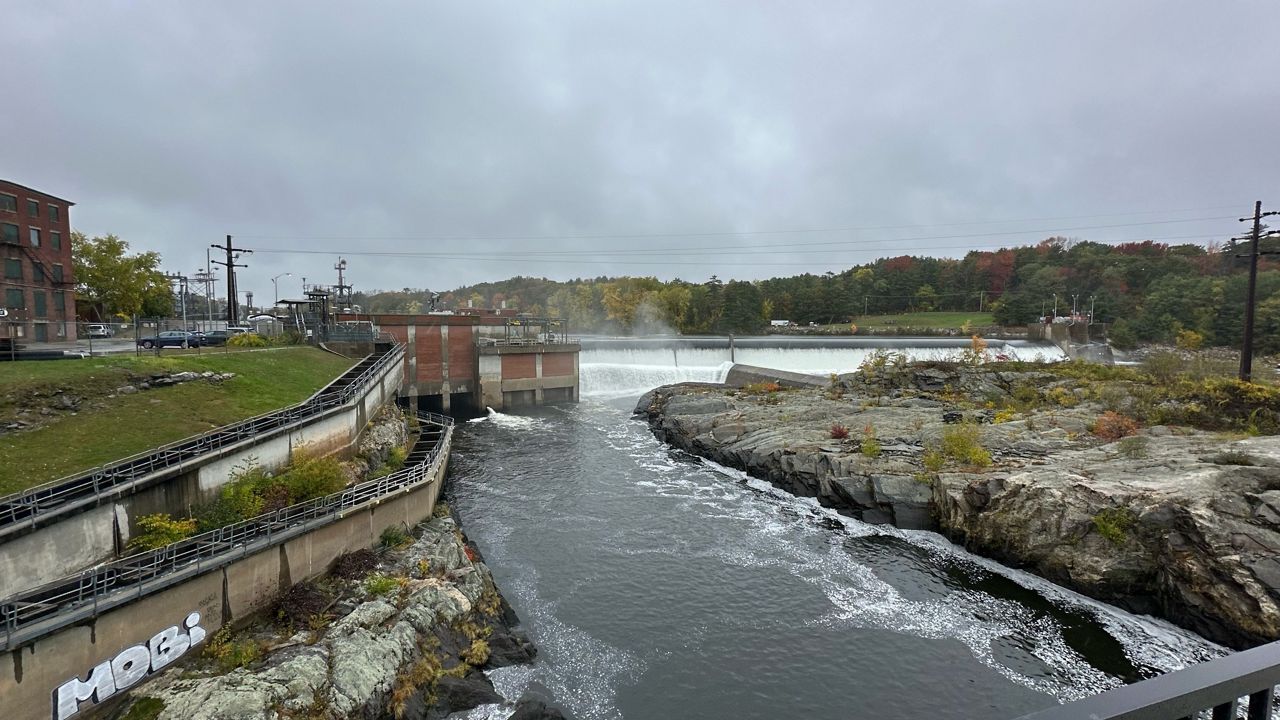
BRUNSWICK – An environmental activist coalition is blaming thousands of fish deaths over the weekend on a hydroelectric dam in Brunswick.
Members of Free the Andro, a coalition of local, state and national activist organizations, reported finding large numbers of dead alewife fish along the banks of the Androscoggin River beginning Sunday.
“It’s easily in the thousands,” said Chip Spies, Brunswick resident and founder and president of Free the Andro.
The fish were found in an area beginning just downriver of the Brunswick Hydroelectric Station, commonly known as the Brunswick dam, which straddles the river next to the bridge connecting Brunswick and neighboring Topsham. Spies said the dead fish were found as far away as half a mile downriver.
Spies said officials in Sabattus opened the Sleeper Dam over the weekend to lower the level of Sabbatus Pond, which led to a mass group of Alewives coming down the river.
The dam is equipped with fishways, which are designed to allow fish to pass the dam without being harmed, but Spies said the fishways’ design is outdated and ineffective.

“Rather than being diverted away from the turbines by a fishway that works, they went through the turbines, and that’s caused a lot of mortality,” he said.
This is not the first mass death of fish Spies has seen. A similar incident happened about eight years ago, and activists have been calling for the dam’s owner, Brookfield Renewable, to upgrade the fishways. Until that happens, he said, incidents like what happened over the weekend remain a possibility.
“The fishways, both upstream and down, just don’t work and that’s well-documented, so this isn’t really a surprise,” he said. “It’s just another example of the failure of the fishways.”
Company Spokesperson David Heidrich said the dam had scaled down operations in anticipation of the fish migration. When workers noticed the dead fish on Saturday, he said, the dam's operators shut the turbines down completely to prevent further harm.
"Protection of migratory fish species remains an important operational priority for BWPH," he said. "We are continuing to review the circumstances and will work closely with state and federal resource agencies to better understand what occurred."
According to information from the town of Brunswick, the dam was officially completed in 1983. A company spokesperson did not immediately respond to a request for comment from Spectrum News, but Spies said the company is aware of the problem. In fact, he said, as part of its federal licensing renewal, it has to upgrade the fishways.
Right now, Spies said, officials and organizations like his are reviewing proposed upgraded version of the fishways, and he hopes that after 30 years, a new design will work better.
“What we’re hoping is the technology has progressed to the point and understanding of fish behavior and fluid dynamics around the dams, both above and below, will lead us to a much better solution for fish passage," he said.